
Hängende Wangen straffen: Was wirklich hilft, ohne OP
The most effective approach against sagging cheeks combines volume enhancement with collagen-stimulating tightening. For mild to moderate sagging, non-surgical methods are usually sufficient. The appropriate combination depends on the severity:
- Mild Sagging: Microneedling, RF treatments, or at-home devices as a maintenance strategy.
- Moderate Sagging: Hyaluronic acid fillers or biostimulators like Sculptra, often combined with HIFU or thread lifts.
- Severe Sagging: A surgical facelift usually remains the more effective solution here, as it actually removes excess skin.
The first step should always be a specialist consultation. Only then can your own condition be realistically assessed before investing money and time in a method that is not suitable for your individual case.
Key Takeaways
The most effective strategy against sagging cheeks combines volume enhancement with collagen-stimulating tightening, tailored to the individual severity of the sagging.
| Topic | Details |
|---|---|
| Recognize the cause | Volume loss and collagen degradation are the main drivers, not just loose skin. |
| Choose method based on severity | Mild cases benefit from microneedling or RF, severe sagging often requires a facelift. |
| Prefer combinations | Fillers for immediate volume plus biostimulator or HIFU for long-term collagen building. |
| Check practitioner quality | Specialist title, CE marking, and before-and-after photos are crucial signs of trust. |
| Use at-home devices as a supplement | The Lumora LED mask and EMS device support regeneration between professional treatments. |
Table of Contents
- What are sagging cheeks? Causes in brief
- Who is suitable for non-surgical methods?
- Non-surgical methods at a glance
- How long do the results last and what do they cost?
- What are the risks and side effects?
- How to find the right method and the right practitioner?
- What do at-home devices really do?
- When is a surgical facelift the better choice?
- What really matters when choosing a method?
- Lumora as a supplement for cheek tightening in everyday life
- Sources
What are sagging cheeks? Causes in brief
Sagging cheeks rarely result from "loose skin" alone. The actual drivers are volume loss in the midface and age-related degradation of collagen and elastin, accompanied by downward fat displacement and slight bone loss in the cheek area.
The effect is exacerbated by UV exposure, smoking, and significant weight loss. All of this further accelerates collagen depletion.
- Volume loss in the midface as the main cause
- Collagen and elastin degradation from mid-30s
- Fat displacement and slight bone recession
- UV radiation, smoking, and weight loss as exacerbating factors
Those who take action early have an easier time: treatment often begins as early as around 35 years of age, focusing on volume building rather than pure tightening.
Who is suitable for non-surgical methods?
Non-surgical procedures are particularly suitable for people with mild to moderate sagging, still elastic skin, and realistic expectations of the result. Those who already have significant excess skin or severely slackened connective tissue reach a limit here: these procedures move and tighten tissue, they do not remove skin.
- Suitable: mild to moderate sagging, good skin condition, focus on prevention
- Less suitable: severe excess skin, pronounced tissue laxity
- Recommendation: specialist medical clarification before the first treatment to assess one's own case
Non-surgical methods at a glance
Non-surgical procedures such as hyaluronic acid, biostimulators, thread lifts, HIFU, radiofrequency, and microneedling collectively cover almost the entire spectrum of mild to moderate sagging. Each method has a different mechanism of action, and that's precisely what often makes the choice difficult.
Hyaluronic acid fillers (V-lift): The classic among volume-building methods. Fillers immediately lift the cheek area, with effects typically lasting several months. Advantage: visible results immediately after treatment. Disadvantage: repeat treatments are necessary, and if injected unskillfully, the result can look unnaturally puffy.
Biostimulators like Sculptra or Radiesse: Instead of immediately refilling volume, these preparations stimulate the body's own collagen production. The effect builds up over weeks, but often lasts significantly longer than traditional fillers. They are particularly suitable for patients who prefer a more natural, gradual progression.
Thread lift: Absorbable suspension threads mechanically lift the tissue and simultaneously stimulate collagen formation. Durability ranges from several months to a few years. Important: placement requires genuine experience from the practitioner, otherwise asymmetric or palpable results may occur.
HIFU (Ultherapy), Sofwave, and radiofrequency: These procedures use focused heat in deeper skin layers. The thermal micro-stimuli stimulate collagen production, but the results only become visible after weeks to months, usually over several sessions. EMFace combines radiofrequency with simultaneous muscle stimulation and also targets the facial muscles.
Microneedling and RF-Microneedling: Fine needles create micro-injuries that stimulate collagen production. In combination with radiofrequency, the tightening effect is further enhanced. A good complement to other procedures, rarely sufficient as a sole solution.
Botulinum toxin (Nefertiti lift): This is not about volume, but about muscle modulation. Used selectively, botulinum toxin can influence the direction of pull of certain muscles, thereby supporting the cheek contour, usually as an adjunct to fillers or thread lifting.
Pro Tip: Feel free to combine methods instead of relying on a single one. Fillers for immediate volume compensation, plus a biostimulator or HIFU for long-term collagen building. This dual approach explains why combination therapies often deliver better results in practice than any single method.
How long do the results last and what do they cost?
Some effects are immediately visible, others require patience. Fillers show their effect directly on the treatment table, while HIFU and RF results build up over weeks to months.
- Hyaluronic acid fillers: 6 to 18 months durability
- Biostimulators: effect over months, sometimes several years
- Thread lift: approximately 12 to 36 months
- Surgical facelift: permanent
Costs vary greatly depending on the practice, region, and extent of the treatment. Many sessions last 30 to 60 minutes and are usually socially acceptable on the same day, which makes minimally invasive procedures practical in everyday life.
What are the risks and side effects?
Swelling, redness, and minor hematomas are among the most common, usually temporary, side effects of almost any non-surgical method. They typically subside within a few days.
Less common but serious: with fillers, there is a small risk of vascular occlusion, identifiable by severe pain, unusual whitening, or persistent discoloration of the skin. This is precisely why the practitioner's experience is one of the most important safety factors.
- Red flags: unrealistic promises of success, lack of specialist medical qualification
- Red flags: no clear product labeling or CE approval
- Safety check: preliminary consultation, information on alternatives, aftercare plan
How to find the right method and the right practitioner?
A good consultation clarifies more than just the price. These questions should be on your list:
- What is the specific diagnosis, volume loss or excess skin?
- What alternatives are there to the proposed method?
- What does aftercare look like, and what side effects can realistically be expected?
Also look for tangible signs of trustworthiness:
- Specialist title and verifiable certificates of the practitioner
- Before-and-after photos from their own practice, not just stock material
- CE marking as a medical device for all equipment used
- Written treatment plan with photo documentation before starting
What do at-home devices really do?
At-home RF devices and microcurrent applications can stimulate collagen and improve skin elasticity, especially with regular use over several weeks. LED red light additionally supports regeneration and blood circulation of the skin.
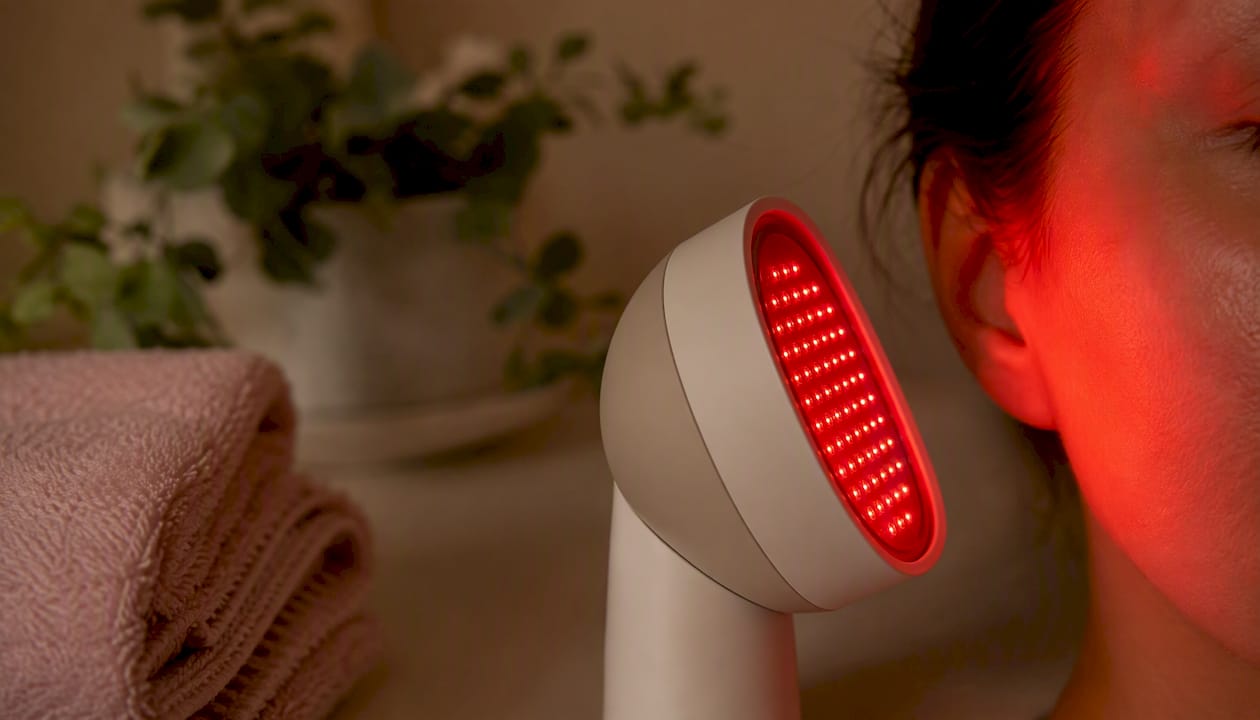
Their limit lies with severe excess skin: here, at-home devices do not replace professional treatment; they complement it. An LED model like the Lumora LED mask or an EMS facial lifting device with microcurrent, heat, and LED are suitable as a supplement to your skincare routine. Always check for CE marking and possible contraindications beforehand.
When is a surgical facelift the better choice?
With significant excess skin and severely slackened tissue, every non-surgical method reaches a physical limit: it cannot remove skin, only move or tighten it. Here, a facelift remains the most effective long-term solution.
The trade-off primarily involves recovery time and risk versus a lasting result, compared to recurring minimally invasive sessions. If in doubt, a surgical second opinion is worthwhile.
What really matters when choosing a method?
The biggest source of error is not the wrong method, but the wrong expectation of it. Anyone who expects a thread lift to achieve the same as a facelift will be disappointed, no matter how skilled the practitioner.
An interesting point that is rarely openly discussed is that fat-dissolving injections can even be counterproductive for sagging cheeks, as additional volume loss tends to worsen sagging rather than alleviate it. Volume enhancement here trumps the intuitive idea of simply injecting away fat.
My assessment: Combination therapies almost always outperform single solutions once the sagging goes beyond the very mild stage. An at-home device can accompany this process and support maintenance, but it does not replace a specialist's assessment of one's own condition.
Lumora as a supplement for cheek tightening in everyday life
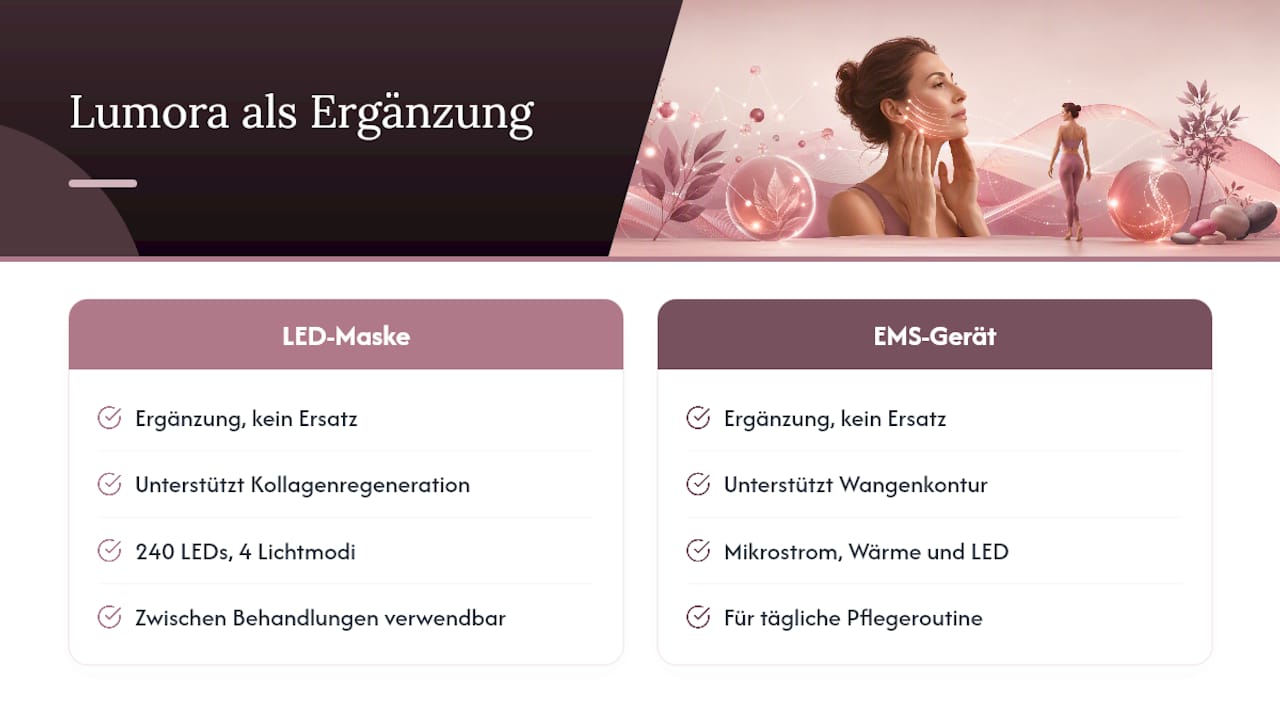
Lumora does not offer an alternative to thread lifts or HIFU, but rather a way to effectively utilize the time between professional treatments and maintain results longer.
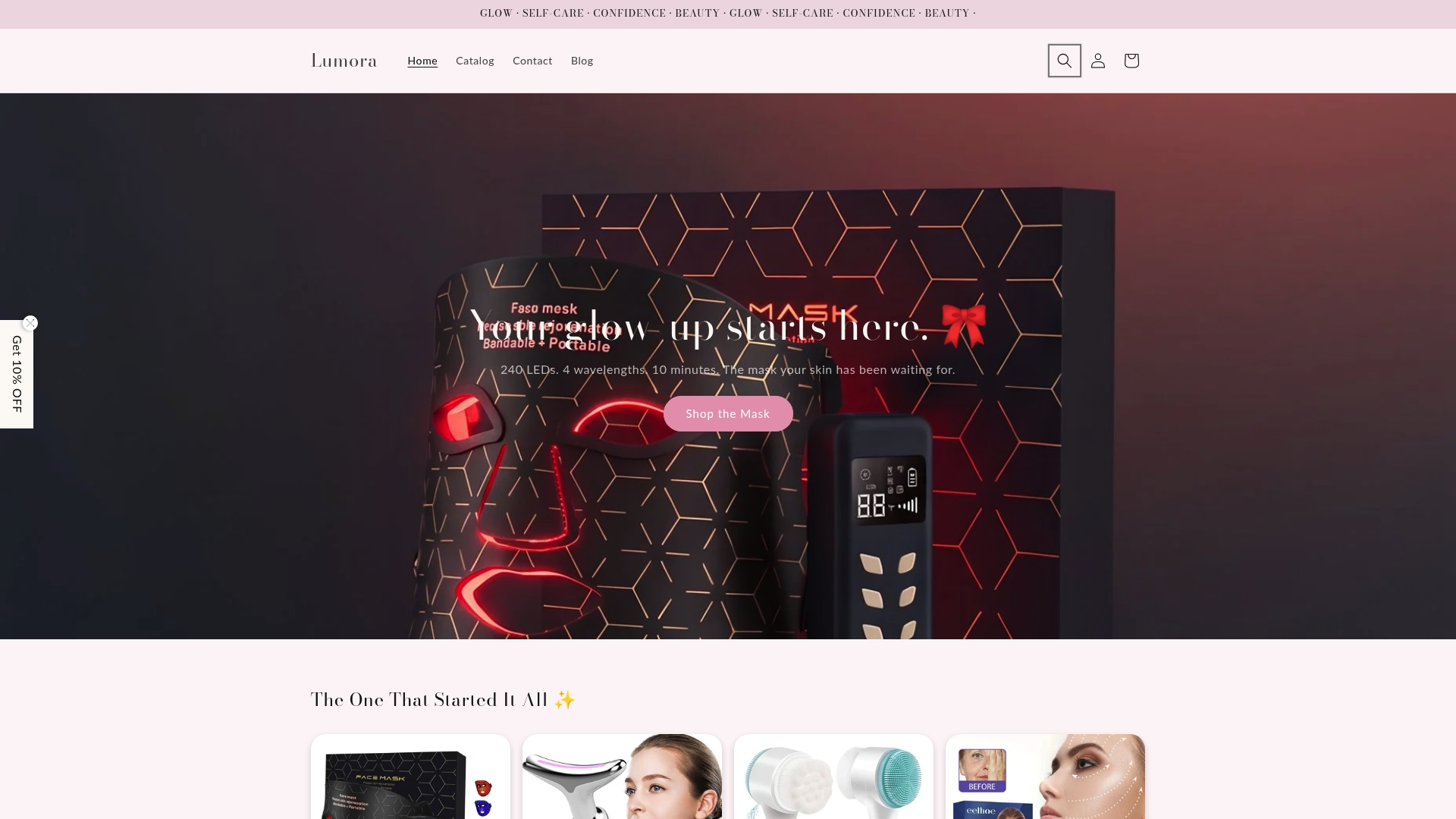
The Lumora LED mask works with 240 LEDs in four light modes and supports collagen regeneration between treatment appointments. The EMS facial lifting device combines microcurrent, heat, and LED and is suitable for daily skincare routines if you want to additionally support your cheek contour. Both devices carry the necessary CE marking as a medical product and are designed for home use, including user instructions and customer service for questions about application.
The disclaimer remains important: These devices do not replace professional treatment for severe excess skin; they complement it. Anyone who wants to maintain their results longer after a filler or HIFU treatment will find the appropriate addition for their skincare routine in the product overview.
Sources
For those who want to delve deeper into the topic, here are reliable sources:
- Remove sagging cheeks before-after
- Sagging cheeks I Causes, treatment, risks, costs and much more.
- Tighten sagging cheeks: Which methods really work - from exercises to thread lifts
- Radiofrequency devices in test: 6 tools for tighter skin
This article contains general information and does not replace consultation with a qualified physician. Please consult a qualified medical professional regarding your personal situation before taking action based on this content.